After Your Visa: The Complete Pre-Departure Checklist for Documents, Luggage and Arrival
Visa in hand? Now for documents, tickets, luggage, plug adapters and your plan after arrival. A complete guide with a checklist for students going abroad to study for the first time.
Once your visa is in hand, start preparing at least 4–6 weeks before you travel. Keep the originals of your passport, visa, ticket, offer letter and certificates in your hand luggage, with copies in your checked bag and online. Match the name on your ticket to your passport, allow enough time for transit and pack to the airline’s baggage policy. Take medicines with prescriptions, buy an adapter for your destination’s plug type, and arrange accommodation, airport transport and emergency contacts before you leave home.
Offer letter and visa in hand, now it is time to go to the country of your dreams. But on a first trip, forgetting one paper can leave you stuck at the airport.
You may need to show papers in three places: immigration, the airport and your first day at university.
Tick what is ready in the list below. Your progress is saved in this browser, so you can check things off over a few days.
The same documents, in three places
🎒
In your hand luggage
All originals. Passport, visa and admission papers never go in checked luggage.
🧳
In your checked bag
One set of photocopies, so you can manage even if your hand luggage is lost.
☁️
Online
Scans in secure cloud storage or email. Leave a set with your family too.
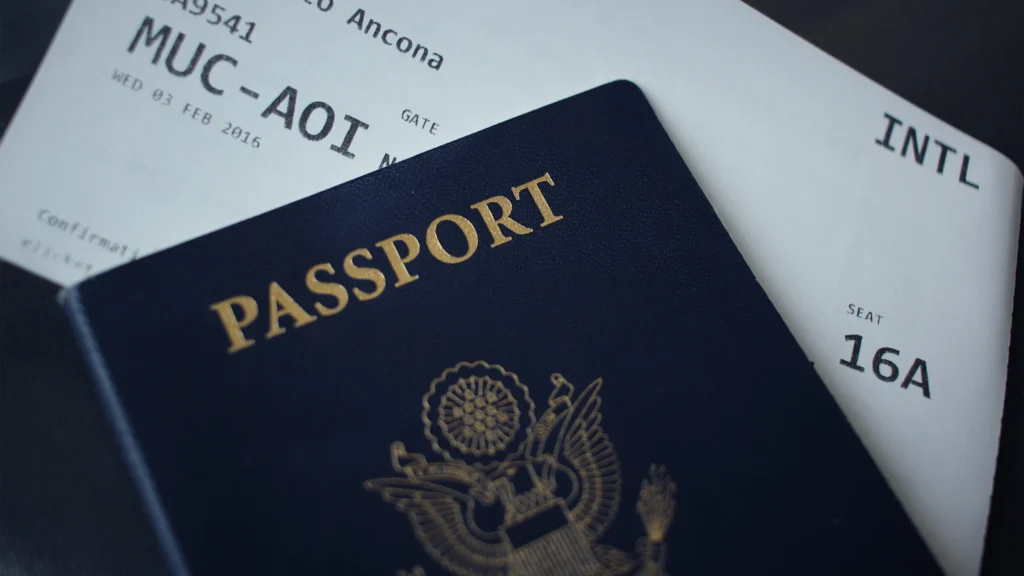
Check the spelling of your nameThe name on your ticket must match your passport exactly. Also check your passport and visa validity, the ticket date and the flight time side by side.
From visa to class: a 6-week timeline
Say your visa is in hand and classes start in six to eight weeks. Doing each task at the right time avoids pressure in the final week:
4–6 weeks beforeBuy your ticket, confirm your accommodation, and book the university’s airport pick-up if it has one.
2–3 weeks beforeSee a doctor and a dentist, get your medicines and prescriptions, and activate an international card.
1 week beforeMake digital copies of your documents, buy adapters, pack your luggage and weigh it.
The day before you travelCheck in online, check your hand luggage one last time, and charge your phone and power bank.
Travel dayReach the airport at least 3 hours early, but follow the airline’s instructions first.
First 24 hours after arrivingTell your family, get online, check in to your accommodation and rest.
First weekReport to the university and complete enrolment, and do any local registration and open a bank account as needed.
Luggage: what goes where
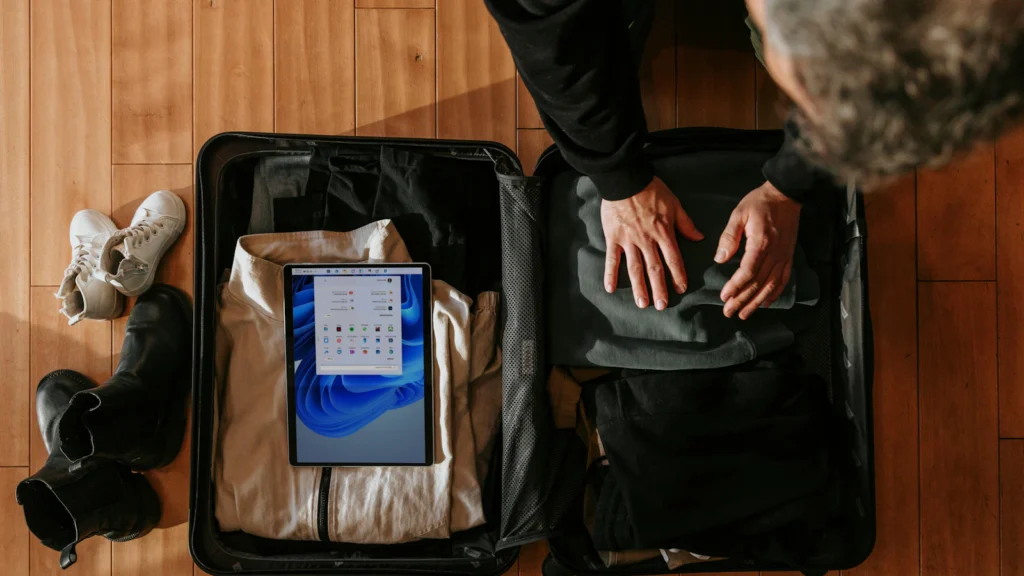
Check the airline’s baggage policy, then start packing.
Weight and size limits differ between airlines, so the baggage policy that comes with your ticket is your real rule. Broadly, the split is:
Keep in your hand luggage
Passport, visa, ticket and all original certificates
Regular medicines, in original packs with prescriptions
Phone, laptop, chargers and power bank
Money and cards for the first few days
One set of clothes, in case your luggage arrives late
Put in checked luggage
Clothes for the weather; in a cold country keep a jacket within reach too
Shoes and things you will use in the first few weeks
The set of document photocopies
Sharp items such as scissors and razors
Dry spices, but check the destination’s customs rules
Never takeliquids in containers over 100 ml in hand luggage, a power bank in checked luggage, meat or dairy products banned in many countries, or a packet someone else gave you when you do not know what is inside.
Keep one practical sum in mind: most things can also be bought in the destination country. Excess baggage fees are often more than the item itself costs.
Tickets and the airport: what to know in advance
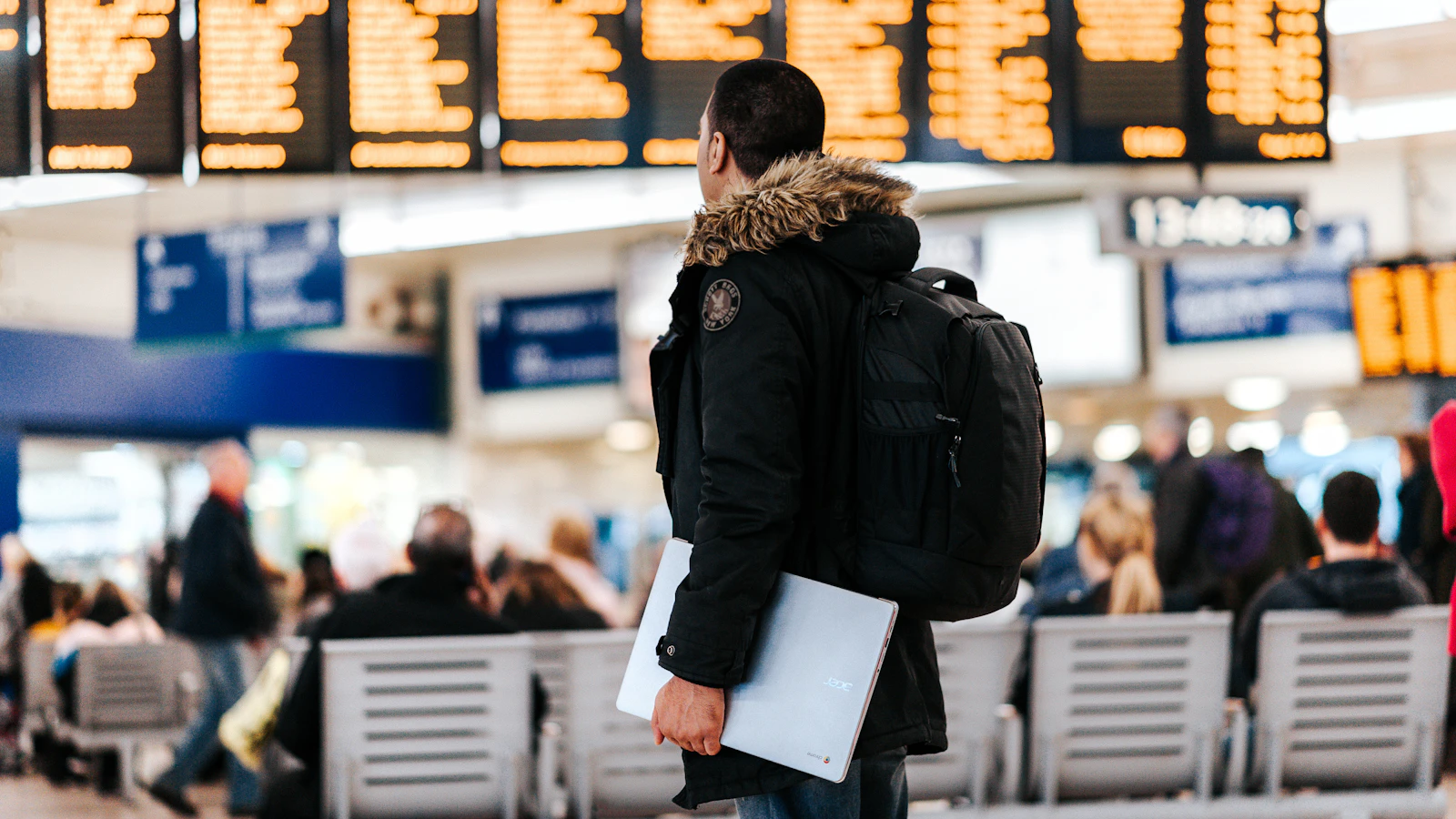
After landing in transit, the first job: check the gate for your next flight on the board.
When buying a ticket, don’t look only at the price. Get answers to five questions:
Direct or transit? With a transit at a large airport, a layover of at least 2–3 hours is safe.
Do I need a transit visa? Some countries require one even if you stay inside the airport. Ask the airline in writing.
Will my luggage go through to my final destination? If not, you have to collect your bags midway and check them in again.
How many kilos can I take? Check the weight and size for checked and hand luggage separately.
When will I arrive? Arriving at night makes transport and check-in harder, so take a daytime flight if you can.
Keep these within reach at immigrationPassport, visa, offer or admission papers, your accommodation address and financial proof. Answer questions briefly and truthfully. Keep your luggage tag receipt safe; you will need it if a bag is lost.
Electronics: find your country’s plug
Bangladesh uses 220 volts, and sockets are usually types C, D and G. Type your destination in the box below to see what you need:
Country
Plug type
Voltage
What you need
United Kingdom UK
G
230V
Adapter with three flat pins
United States USA
A, B
120V
Adapter; a converter too for 220V-only devices
Canada Canada
A, B
120V
Adapter; a converter too for 220V-only devices
Malaysia Malaysia
G
240V
Adapter with three flat pins
South Korea Korea
C, F
220V
Two-round-pin plugs usually work
Cyprus Cyprus
G
230V
Adapter with three flat pins
Germany Germany
C, F
230V
Two-round-pin plugs usually work
Most of Europe, including France, Italy and Sweden Europe
C, F (E in some places)
230V
Two-round-pin plugs usually work
If your charger says “100–240V”, it works in every country; you only need to match the plug shape. 220V-only devices such as hair dryers or rice cookers will not work properly in 120V countries.
Phone and online preparation
Keep copies of important files on your phone and in secure online storage.
Turn on international roaming on your Bangladeshi SIM, or buy an eSIM for your destination in advance.
Check whether bank app and email OTPs come to your Bangladeshi number. Do not close that number.
Money and cards
For the first few days after arriving you will need both cash and a card for food, transport and a SIM. Bangladesh Bank changes the limit on how much foreign cash you can carry from time to time, so ask your own bank for the current rule and get the endorsement on your passport.
Activate a dual-currency or international card in advance and test it with a small transaction. Do not keep all your money in one place. Leave the contact details of the bank where you opened your student file with your family.
Want one last check of all your papers before you travel?
Our counsellor will check your offer letter, visa, ticket and accommodation papers for mismatches, free of charge.
Where you will stay, how you will get there from the airport and whom to call in an emergency: you need the answers to these three questions before you leave home.
Confirm accommodation for at least your first few weeks. Write down the numbers of the university’s international student office, your accommodation, people you know and the Bangladesh embassy or high commission, both on your phone and on paper.
Emergency numbers in your destination
🇬🇧
United Kingdom
999 or 112
🇺🇸
USA and Canada
911
🇲🇾
Malaysia
999
🇰🇷
South Korea
Police 112, ambulance and fire 119
🇪🇺
Cyprus and EU countries
112
After you arrive, also save the campus security number from the university website.
Frequently asked questions
How early should I get to the airport?
Usually at least 3 hours before an international flight. On a first trip it is better to go a little earlier, but the airline’s instructions are final.
Can I put a power bank in my checked luggage?
No. Lithium battery power banks are allowed only in hand luggage. Many airlines also limit their use during the flight.
Can I take medicines from home?
Regular medicines are usually allowed in amounts for personal use, in original packs and with prescriptions. Some medicines are controlled in certain countries, so check the destination’s rules first.
What should I do if my luggage is lost?
Before leaving the airport, report it at the airline’s baggage service counter and get a reference number. That is when your luggage tag receipt is needed.
What should I do on my first day?
Let your family know, get online, check in to your accommodation and rest. Check your email for the university’s reporting and enrolment dates.
Talk it through with a counsellor.
Free, one to one, in our Baridhara office or by phone.

 Global Vision